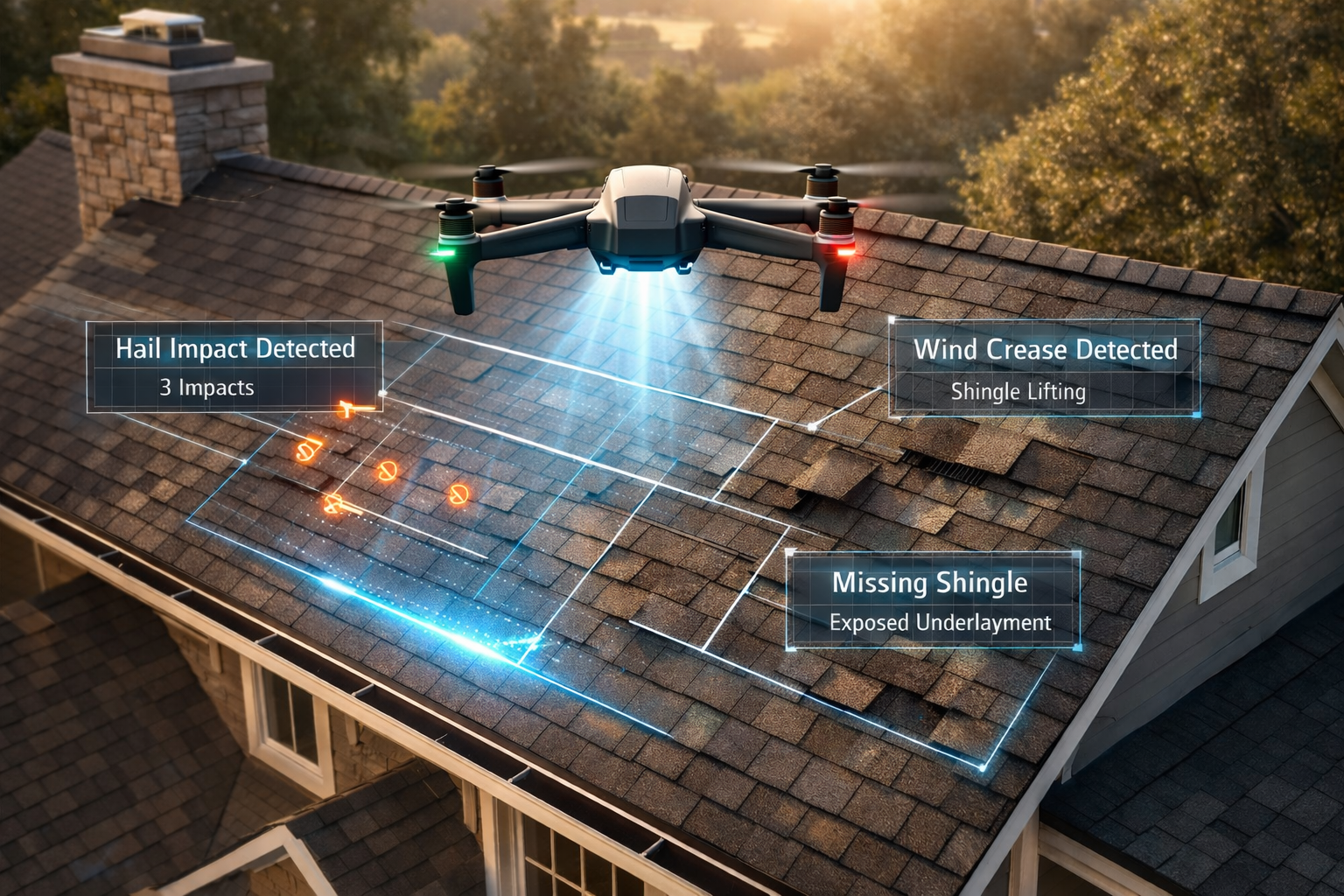
StormPixl uses drones and AI-assisted roof analysis to turn inspection photos into clearer, more consistent roof files that help carriers reduce adjuster touch time, improve desk review, and scale CAT claim handling with less rework. The same roof intelligence can also support underwriting, renewals, and property risk assessment before the next loss.
Reduce time adjusters and desk reviewers spend digging through raw roof photos
Improve file consistency across staff adjusters, IA firms, and inspection vendors
Extend roof condition insight into underwriting, renewals, and CAT risk planning
One Roof File. Lower Handling Cost. Better Risk Visibility.
StormPixl turns raw roof inspection photos into organized, AI-assisted roof documentation that is easier to review, audit, and reuse across the insurance lifecycle. Claims teams get faster review and more consistent files. QA and vendor leaders get better oversight. Underwriting and risk teams get clearer roof condition visibility they can use for selection, renewals, and exposure management.
Reduce adjuster touch time and desk review effort
Lower reinspection and follow-up friction with stronger documentation
Improve QA consistency across internal and external adjuster networks
Support underwriting, renewal review, and property risk triage with clearer roof evidence
Make CAT volume more scalable without linearly increasing cost
The real problem
The inspection is not the expense. Manual review and inconsistency are.
Most carriers can get roof photos. The cost shows up after capture, when adjusters, desk reviewers, supervisors, and vendors still have to sort images, interpret damage, explain the roof story, and build a file another reviewer can actually use. That manual layer drives handling expense, slows cycle time, and creates file variability. Under CAT volume, those problems multiply fast.
In claims ops
Every extra minute in review raises handling cost
When adjusters and desk reviewers have to work through disorganized roof galleries, touch time climbs and files move slower. Start from a clearer roof file so more claims can move with less manual drag.
In QA and vendor management
Inconsistent files make oversight harder and more expensive
Supervisors and vendor managers should not have to guess which files are strong and which ones will require rescue work. More consistent documentation makes QA, coaching, and vendor accountability easier.
In CAT and follow-up
Weak documentation creates rework, reinspections, and added expense
The original file sets the tone for everything after it. When the roof story is unclear, supplements, escalations, disputes, and reinspections become slower and more expensive.
In underwriting and risk
Photo dumps do not help you see roof risk early enough
If roof condition stays buried in unstructured photos, it is harder to use that information for underwriting triage, renewal review, accumulation insight, and broader property risk assessment.
Why carriers switch
Increase visibility. Reduce risk. Remove the unknown.
Capturing the roof may only take minutes. The real operating cost shows up when the documentation comes back raw, messy, and hard to review. StormPixl helps organize and surface what matters so claims, QA, and follow-up start from a stronger file.
What carriers deal with now
High adjuster touch time spent sorting raw roof photos
Inconsistent file quality across staff, IA firms, and vendors
More back-and-forth during reinspections, disputes, and escalations
QA and supervisor friction because the roof story is unclear
Limited reuse of roof inspection data in underwriting or renewal decisions
What changes with StormPixl
Faster review with clearer roof documentation within just a few minutes
Lower per-file handling drag through better structure and consistency
Stronger support for QA, desk review, reinspections, and disputes
Better CAT scalability without sacrificing file quality
More usable roof intelligence for underwriting and risk workflows
Why carriers trust StormPixl
Your teams still make the decision. StormPixl helps them make it from superior data.
StormPixl is AI-assisted roof documentation and review support. It does not replace carrier judgment, coverage decisions, reserving decisions, or underwriting authority. It helps surface likely trouble spots, organize the roof story, and give the next reviewer a clearer, more consistent file to work from.
What that means in real life
Claims decisions still stay with carrier adjusters and supervisors
Underwriting decisions still stay with carrier underwriting teams
StormPixl helps surface roof condition signals and organize evidence more clearly
Your current inspection, vendor, and claims workflows do not need a full reset
Decision authoritystays with the carrier
File qualityimproves from the start
Workflow disruptionnot required
FAQ
Questions carriers ask before they change how roof files move through claims and risk.
These are the practical questions that come up when carriers want lower handling cost, stronger file consistency, and clearer roof-condition visibility across claims and underwriting.
No. StormPixl is designed to fit into the inspection, vendor, and claims workflows you already use. The value is a clearer roof file and better roof-condition visibility coming out of the process.
No. StormPixl is AI-assisted documentation and review support. Claims decisions stay with carrier adjusters and supervisors, and underwriting decisions stay with carrier underwriting teams.
It creates more consistent roof documentation across staff adjusters, IA firms, and inspection vendors, which makes QA review, coaching, and vendor accountability easier.
Yes. StormPixl helps carriers move clearer files with less manual review drag, which matters when assignment volume spikes and consistency usually breaks down.
Yes. The same roof-condition intelligence can support underwriting triage, renewal review, and broader property risk assessment instead of staying buried in raw photo galleries.
A clearer roof file with organized visuals, AI-assisted roof documentation, and a stronger starting point for claims review, QA, audits, reinspections, and risk workflows.